




Get Requestly
Reporting is an essential part of any automated testing strategy. In Selenium, reports provide visibility into test execution results, such as passed, failed, or skipped test cases, along with execution time and logs.
Without structured reporting, debugging becomes difficult and stakeholders cannot easily track testing progress. TestNG, one of the most popular testing frameworks, comes with built-in support for generating detailed HTML and XML reports that help QA teams analyze the health of their automation suites.
Overview of TestNG Framework
TestNG (Test Next Generation) is a Java-based testing framework inspired by JUnit and NUnit. It supports a wide range of features including annotations, grouping of test cases, dependency testing, data-driven testing, and parallel execution.
For Selenium automation, TestNG acts as the backbone by providing structure to test cases and flexibility in execution. One of its most powerful features is the ability to run tests in parallel, which drastically reduces total execution time.
Understanding Parallel Test Execution in TestNG
Parallel test execution refers to running multiple test cases, classes, or suites at the same time instead of sequentially.
This capability is crucial when dealing with large-scale test automation projects where running tests sequentially may take hours. Parallelism ensures faster feedback, better resource utilization, and quicker release cycles.
Setting Up Parallel Execution in TestNG
To enable parallel execution, TestNG configurations must be set up correctly within the testng.xml file. This file defines which tests will run, the order of execution, and whether they should execute in parallel.
Prerequisites for Configuration
- Java Development Kit (JDK) installed
- Selenium WebDriver set up with the desired browser drivers
- IDE such as IntelliJ IDEA or Eclipse
- TestNG plugin installed in the IDE
Adding Maven Dependencies for TestNG
If using Maven for project management, TestNG can be added via the pom.xml file:
<dependency>
<groupId>org.testng</groupId>
<artifactId>testng</artifactId>
<version>7.8.1</version>
<scope>test</scope>
</dependency>This ensures all TestNG libraries are available for parallel execution.
Executing Tests Sequentially in TestNG
By default, TestNG executes test methods sequentially in the order defined. For smaller suites, this may be sufficient. However, when suites grow larger, sequential execution becomes a bottleneck. Transitioning to parallel execution improves efficiency without altering the logic of test cases.
Parallel Execution Scopes in TestNG
TestNG allows parallel execution at multiple granularities, controlled by attributes in testng.xml.
Running Test Methods in Parallel
Setting parallel=”methods” ensures that multiple test methods within the same class run simultaneously.
<suite name="ParallelMethodsSuite" parallel="methods" thread-count="3">
<test name="ParallelMethodsTest">
<classes>
<class name="tests.SampleTest"/>
</classes>
</test>
</suite>Running Test Classes in Parallel
When parallel=”classes” is used, different test classes run at the same time.
<suite name="ParallelClassesSuite" parallel="classes" thread-count="3">
<test name="ParallelClassesTest">
<classes>
<class name="tests.FirstTest"/>
<class name="tests.SecondTest"/>
</classes>
</test>
</suite>Running Test Suites in Parallel
If multiple test suites exist, they can be executed in parallel by setting parallel=”tests”. This is useful for large automation pipelines.
<suite name="ParallelSuites" parallel="tests" thread-count="2">
<test name="Suite1">
<classes>
<class name="tests.TestOne"/>
</classes>
</test>
<test name="Suite2">
<classes>
<class name="tests.TestTwo"/>
</classes>
</test>
</suite>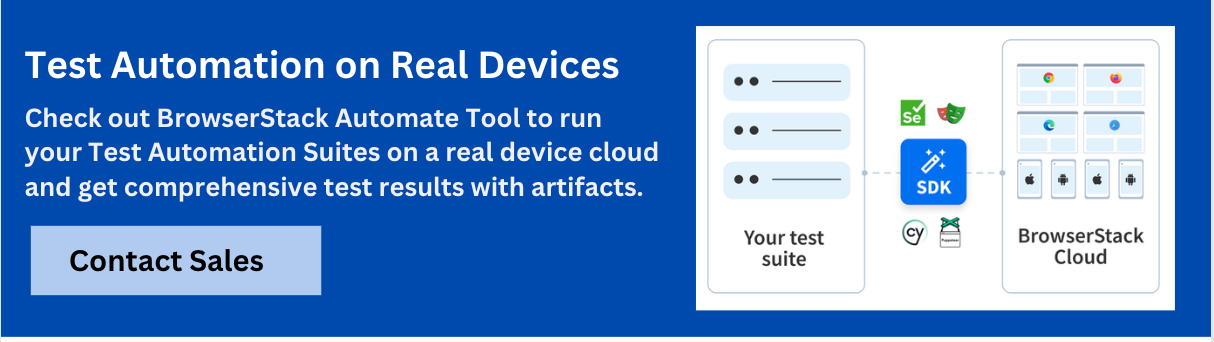
Managing Threads in TestNG
The thread-count parameter defines how many tests or methods can run simultaneously. Proper thread management ensures resources are not overloaded. For example, using a thread count higher than the number of browser instances supported by the system can lead to failures or unexpected behavior.
Serialized vs. Parallelized Test Execution: A Performance Study
- Serialized Execution: Runs one test after another. Reliable but time-consuming.
- Parallelized Execution: Runs multiple tests simultaneously, reducing execution time significantly.
For example, a suite of 50 tests that takes 50 minutes in serialized mode could complete in under 10 minutes with 5 threads running in parallel.
Converting Static WebDriver Instances to Non-Static for Parallel Runs
A common mistake in parallel execution is using a static WebDriver instance, which causes conflicts across threads. Instead, implement ThreadLocal
private static ThreadLocal<WebDriver> driver = new ThreadLocal<>();
public static WebDriver getDriver() {
return driver.get();
}
@BeforeMethod
public void setUp() {
WebDriver webDriver = new ChromeDriver();
driver.set(webDriver);
}
@AfterMethod
public void tearDown() {
getDriver().quit();
driver.remove();
}Using DataProviders for Parallel Test Execution in TestNG
Here are the steps to using DataProviders for Parallel Test Execution in TestNG:
Step 1: Configure DataProvider with Parallel Enabled
@DataProvider(name = "testData", parallel = true)
public Object[][] provideData() {
return new Object[][] { {"chrome"}, {"firefox"}
};
}Step 2: Associate Test Method with DataProvider
@Test(dataProvider = "testData")
public void runTest(String browser) {
System.out.println("Running on: " + browser);
}Step 3: Adjust Thread Count in testng.xml (Recommended)
<suite name="DataProviderParallelSuite" thread-count="2">
<test name="BrowserTests">
<classes>
<class name="tests.BrowserTest"/>
</classes>
</test>
</suite>Cross-Browser Parallel Test Execution with TestNG
Follow these steps below to perform cross browser parallel tets execution with testNG:
Step 1: Create a Parameterized Test Method for Browser Name
@Parameters("browser")
@BeforeMethod
public void setUp(String browser) {
if(browser.equalsIgnoreCase("chrome")) {
driver.set(new ChromeDriver());
}
else if(browser.equalsIgnoreCase("firefox")) {
driver.set(new FirefoxDriver());
}
}Step 2: Implement the Test Case
@Test
public void openGoogle() {
getDriver().get("https://www.google.com");
}Step 3: Perform Cleanup After Execution
@AfterMethod
public void tearDown() {
getDriver().quit();
}Step 4: Define Browsers in testng.xml and Enable Parallel Mode
<suite name="CrossBrowserSuite" parallel="tests" thread-count="2">
<test name="ChromeTest">
<parameter name="browser" value="chrome"/>
<classes>
<class name="tests.CrossBrowserTest"/>
</classes>
</test>
<test name="FirefoxTest">
<parameter name="browser" value="firefox"/>
<classes>
<class name="tests.CrossBrowserTest"/>
</classes>
</test>
</suite>Common Challenges in Parallel Execution with TestNG
While parallel execution in TestNG significantly accelerates test automation, it introduces a unique set of challenges that testers must address to ensure stability and reliability. These challenges often arise due to resource sharing, improper configuration, or test dependencies.
WebDriver Instance Conflicts
One of the most frequent issues occurs when multiple test threads try to access the same static WebDriver instance.
Since WebDriver is not inherently thread-safe, shared usage can cause unexpected behavior such as test failures, browser crashes, or commands being sent to the wrong browser instance. Implementing ThreadLocal
Test Dependency and Data Sharing
Tests that depend on shared data or execution order may fail when run in parallel. For instance, if one test inserts a record into a database while another deletes it simultaneously, conflicts can occur.
To avoid this, test cases should be designed to run independently with unique datasets or mocked test data.
- Resource Constraints on Local Machines:Running multiple browsers in parallel consumes significant CPU and memory.
On a local setup, this can quickly overwhelm system resources, causing browsers to become unresponsive. This limitation can be overcome by offloading execution to a cloud-based Selenium grid that dynamically provisions resources.
- Synchronization Issues: If test methods rely on certain application states (e.g., waiting for an element to load), parallel execution may cause race conditions.
Without proper synchronization mechanisms like explicit waits, tests may fail inconsistently. Ensuring appropriate wait strategies and avoiding hard-coded delays is essential for stability.
- Debugging Failures in Parallel Mode: Debugging is more complex when multiple tests execute simultaneously. Logs and screenshots may overlap or get overwritten if not managed carefully.
Configuring thread-safe logging, unique screenshot naming conventions, and structured reporting (such as TestNG listeners or Extent Reports) helps in troubleshooting.
- Cross-Browser Compatibility Challenges: When executing tests across multiple browsers in parallel, inconsistencies may appear due to browser-specific rendering or JavaScript behavior. A test that passes in Chrome may fail in Firefox when executed at the same time. This requires robust handling of locators, dynamic waits, and cross-browser validation strategies.
- Network and Environment Dependencies: Parallel execution magnifies environmental issues such as unstable internet connections, limited test environments, or shared backend dependencies.
For example, a rate-limited API might fail under concurrent requests from parallel tests. Isolating test environments or using mocking/stubbing for external services can reduce such risks.
Why Run TestNG with Selenium on Real Devices?
Running parallel execution locally speeds up automation, but it does not guarantee accuracy across the browsers and devices end users actually use. A test suite that passes flawlessly on a developer’s Chrome installation may behave differently on Firefox, Safari, or a mobile browser. This is where executing parallel tests on real devices becomes essential.
- True User Conditions: Emulators and simulators cannot replicate all aspects of real user environments, such as network conditions, browser rendering engines, or device-specific quirks.
Running tests in parallel on actual devices ensures validation under real-world conditions.
- Comprehensive Cross-Browser Coverage: Parallel execution on a device cloud allows tests to run across hundreds of browser–OS combinations simultaneously, uncovering compatibility issues faster.
- Faster Feedback Cycles: Running multiple test cases across different environments at once drastically cuts down release cycles, giving QA teams quicker insights.
- Reduced Infrastructure Overhead: Maintaining an in-house grid of browsers and devices is expensive and resource-intensive. A cloud platform provides instant scalability without local infrastructure management.
BrowserStack Automate enables parallel test execution on over 3500 real browsers and devices. With built-in support for TestNG and Selenium, teams can configure parallel execution effortlessly using their existing testng.xml setup.
This ensures test reliability, accelerates feedback loops, and validates user experiences across all critical environments.
Frequently Asked Questions on Parallel Execution
Q1: Does parallel execution affect test accuracy? No, but improper WebDriver management can cause conflicts.
Q2: Can parallel execution be combined with grouping? Yes, TestNG allows combining groups with parallel execution for granular control.
Q3: What is the ideal thread count? It depends on system capacity and the number of tests. A balanced thread count prevents system overload.
Conclusion
Parallel execution in TestNG is a powerful feature that optimizes Selenium test automation. It reduces execution time, supports cross-browser testing, and improves scalability. By configuring testng.xml, managing WebDriver instances properly, and using DataProviders, testers can run multiple tests efficiently.
Running parallel execution on real devices and browsers is the next step to ensure accuracy across environments.
BrowserStack provides a cloud-based Selenium grid that supports parallel execution on thousands of real browsers and devices, helping teams validate web applications at scale without local infrastructure limitations.
Updated content from Google Doc:
Reporting is an essential part of any automated testing strategy. In Selenium, reports provide visibility into test execution results, such as passed, failed, or skipped test cases, along with execution time and logs.
Without structured reporting, debugging becomes difficult and stakeholders cannot easily track testing progress. TestNG, one of the most popular testing frameworks, comes with built-in support for generating detailed HTML and XML reports that help QA teams analyze the health of their automation suites.
Overview of TestNG Framework
TestNG (Test Next Generation) is a Java-based testing framework inspired by JUnit and NUnit. It supports a wide range of features including annotations, grouping of test cases, dependency testing, data-driven testing, and parallel execution.
For Selenium automation, TestNG acts as the backbone by providing structure to test cases and flexibility in execution. One of its most powerful features is the ability to run tests in parallel, which drastically reduces total execution time.
Understanding Parallel Test Execution in TestNG
Parallel test execution refers to running multiple test cases, classes, or suites at the same time instead of sequentially.
This capability is crucial when dealing with large-scale test automation projects where running tests sequentially may take hours. Parallelism ensures faster feedback, better resource utilization, and quicker release cycles.
Setting Up Parallel Execution in TestNG
To enable parallel execution, TestNG configurations must be set up correctly within the testng.xml file. This file defines which tests will run, the order of execution, and whether they should execute in parallel.
Prerequisites for Configuration
- Java Development Kit (JDK) installed
- Selenium WebDriver set up with the desired browser drivers
- IDE such as IntelliJ IDEA or Eclipse
- TestNG plugin installed in the IDE
Adding Maven Dependencies for TestNG
If using Maven for project management, TestNG can be added via the pom.xml file:
<dependency>
<groupId>org.testng</groupId>
<artifactId>testng</artifactId>
<version>7.8.1</version>
<scope>test</scope>
</dependency>This ensures all TestNG libraries are available for parallel execution.
Executing Tests Sequentially in TestNG
By default, TestNG executes test methods sequentially in the order defined. For smaller suites, this may be sufficient. However, when suites grow larger, sequential execution becomes a bottleneck. Transitioning to parallel execution improves efficiency without altering the logic of test cases.
Parallel Execution Scopes in TestNG
TestNG allows parallel execution at multiple granularities, controlled by attributes in testng.xml.
Running Test Methods in Parallel
Setting parallel=”methods” ensures that multiple test methods within the same class run simultaneously.
<suite name="ParallelMethodsSuite" parallel="methods" thread-count="3">
<test name="ParallelMethodsTest">
<classes>
<class name="tests.SampleTest"/>
</classes>
</test>
</suite>Running Test Classes in Parallel
When parallel=”classes” is used, different test classes run at the same time.
<suite name="ParallelClassesSuite" parallel="classes" thread-count="3">
<test name="ParallelClassesTest">
<classes>
<class name="tests.FirstTest"/>
<class name="tests.SecondTest"/>
</classes>
</test>
</suite>Running Test Suites in Parallel
If multiple test suites exist, they can be executed in parallel by setting parallel=”tests”. This is useful for large automation pipelines.
<suite name="ParallelSuites" parallel="tests" thread-count="2">
<test name="Suite1">
<classes>
<class name="tests.TestOne"/>
</classes>
</test>
<test name="Suite2">
<classes>
<class name="tests.TestTwo"/>
</classes>
</test>
</suite>Managing Threads in TestNG
The thread-count parameter defines how many tests or methods can run simultaneously. Proper thread management ensures resources are not overloaded. For example, using a thread count higher than the number of browser instances supported by the system can lead to failures or unexpected behavior.
Serialized vs. Parallelized Test Execution: A Performance Study
- Serialized Execution: Runs one test after another. Reliable but time-consuming.
- Parallelized Execution: Runs multiple tests simultaneously, reducing execution time significantly.
For example, a suite of 50 tests that takes 50 minutes in serialized mode could complete in under 10 minutes with 5 threads running in parallel.
Converting Static WebDriver Instances to Non-Static for Parallel Runs
A common mistake in parallel execution is using a static WebDriver instance, which causes conflicts across threads. Instead, implement ThreadLocal
private static ThreadLocal<WebDriver> driver = new ThreadLocal<>();
public static WebDriver getDriver() {
return driver.get();
}
@BeforeMethod
public void setUp() {
WebDriver webDriver = new ChromeDriver();
driver.set(webDriver);
}
@AfterMethod
public void tearDown() {
getDriver().quit();
driver.remove();
}Using DataProviders for Parallel Test Execution in TestNG
Here are the steps to using DataProviders for Parallel Test Execution in TestNG:
Step 1: Configure DataProvider with Parallel Enabled
@DataProvider(name = "testData", parallel = true)
public Object[][] provideData() {
return new Object[][] { {"chrome"}, {"firefox"}
};
}Step 2: Associate Test Method with DataProvider
@Test(dataProvider = "testData")
public void runTest(String browser) {
System.out.println("Running on: " + browser);
}Step 3: Adjust Thread Count in testng.xml (Recommended)
<suite name="DataProviderParallelSuite" thread-count="2">
<test name="BrowserTests">
<classes>
<class name="tests.BrowserTest"/>
</classes>
</test>
</suite>Cross-Browser Parallel Test Execution with TestNG
Follow these steps below to perform cross browser parallel tets execution with testNG:
Step 1: Create a Parameterized Test Method for Browser Name
@Parameters("browser")
@BeforeMethod
public void setUp(String browser) {
if(browser.equalsIgnoreCase("chrome")) {
driver.set(new ChromeDriver());
}
else if(browser.equalsIgnoreCase("firefox")) {
driver.set(new FirefoxDriver());
}
}Step 2: Implement the Test Case
@Test
public void openGoogle() {
getDriver().get("https://www.google.com");
}Step 3: Perform Cleanup After Execution
@AfterMethod
public void tearDown() {
getDriver().quit();
}Step 4: Define Browsers in testng.xml and Enable Parallel Mode
<suite name="CrossBrowserSuite" parallel="tests" thread-count="2">
<test name="ChromeTest">
<parameter name="browser" value="chrome"/>
<classes>
<class name="tests.CrossBrowserTest"/>
</classes>
</test>
<test name="FirefoxTest">
<parameter name="browser" value="firefox"/>
<classes>
<class name="tests.CrossBrowserTest"/>
</classes>
</test>
</suite>Common Challenges in Parallel Execution with TestNG
While parallel execution in TestNG significantly accelerates test automation, it introduces a unique set of challenges that testers must address to ensure stability and reliability. These challenges often arise due to resource sharing, improper configuration, or test dependencies.
WebDriver Instance Conflicts
One of the most frequent issues occurs when multiple test threads try to access the same static WebDriver instance.
Since WebDriver is not inherently thread-safe, shared usage can cause unexpected behavior such as test failures, browser crashes, or commands being sent to the wrong browser instance. Implementing ThreadLocal
Test Dependency and Data Sharing
Tests that depend on shared data or execution order may fail when run in parallel. For instance, if one test inserts a record into a database while another deletes it simultaneously, conflicts can occur.
To avoid this, test cases should be designed to run independently with unique datasets or mocked test data.
- Resource Constraints on Local Machines:Running multiple browsers in parallel consumes significant CPU and memory.
On a local setup, this can quickly overwhelm system resources, causing browsers to become unresponsive. This limitation can be overcome by offloading execution to a cloud-based Selenium grid that dynamically provisions resources.
- Synchronization Issues: If test methods rely on certain application states (e.g., waiting for an element to load), parallel execution may cause race conditions.
Without proper synchronization mechanisms like explicit waits, tests may fail inconsistently. Ensuring appropriate wait strategies and avoiding hard-coded delays is essential for stability.
- Debugging Failures in Parallel Mode: Debugging is more complex when multiple tests execute simultaneously. Logs and screenshots may overlap or get overwritten if not managed carefully.
Configuring thread-safe logging, unique screenshot naming conventions, and structured reporting (such as TestNG listeners or Extent Reports) helps in troubleshooting.
- Cross-Browser Compatibility Challenges: When executing tests across multiple browsers in parallel, inconsistencies may appear due to browser-specific rendering or JavaScript behavior. A test that passes in Chrome may fail in Firefox when executed at the same time. This requires robust handling of locators, dynamic waits, and cross-browser validation strategies.
- Network and Environment Dependencies: Parallel execution magnifies environmental issues such as unstable internet connections, limited test environments, or shared backend dependencies.
For example, a rate-limited API might fail under concurrent requests from parallel tests. Isolating test environments or using mocking/stubbing for external services can reduce such risks.
Why Run TestNG with Selenium on Real Devices?
Running parallel execution locally speeds up automation, but it does not guarantee accuracy across the browsers and devices end users actually use. A test suite that passes flawlessly on a developer’s Chrome installation may behave differently on Firefox, Safari, or a mobile browser. This is where executing parallel tests on real devices becomes essential.
- True User Conditions: Emulators and simulators cannot replicate all aspects of real user environments, such as network conditions, browser rendering engines, or device-specific quirks.
Running tests in parallel on actual devices ensures validation under real-world conditions.
- Comprehensive Cross-Browser Coverage: Parallel execution on a device cloud allows tests to run across hundreds of browser–OS combinations simultaneously, uncovering compatibility issues faster.
- Faster Feedback Cycles: Running multiple test cases across different environments at once drastically cuts down release cycles, giving QA teams quicker insights.
- Reduced Infrastructure Overhead: Maintaining an in-house grid of browsers and devices is expensive and resource-intensive. A cloud platform provides instant scalability without local infrastructure management.
BrowserStack Automate enables parallel test execution on over 3500 real browsers and devices. With built-in support for TestNG and Selenium, teams can configure parallel execution effortlessly using their existing testng.xml setup.
This ensures test reliability, accelerates feedback loops, and validates user experiences across all critical environments.
Frequently Asked Questions on Parallel Execution
Q1: Does parallel execution affect test accuracy? No, but improper WebDriver management can cause conflicts.
Q2: Can parallel execution be combined with grouping? Yes, TestNG allows combining groups with parallel execution for granular control.
Q3: What is the ideal thread count? It depends on system capacity and the number of tests. A balanced thread count prevents system overload.
Conclusion
Parallel execution in TestNG is a powerful feature that optimizes Selenium test automation. It reduces execution time, supports cross-browser testing, and improves scalability. By configuring testng.xml, managing WebDriver instances properly, and using DataProviders, testers can run multiple tests efficiently.
Running parallel execution on real devices and browsers is the next step to ensure accuracy across environments.
BrowserStack provides a cloud-based Selenium grid that supports parallel execution on thousands of real browsers and devices, helping teams validate web applications at scale without local infrastructure limitations.

Get Started for Free
Contact us