
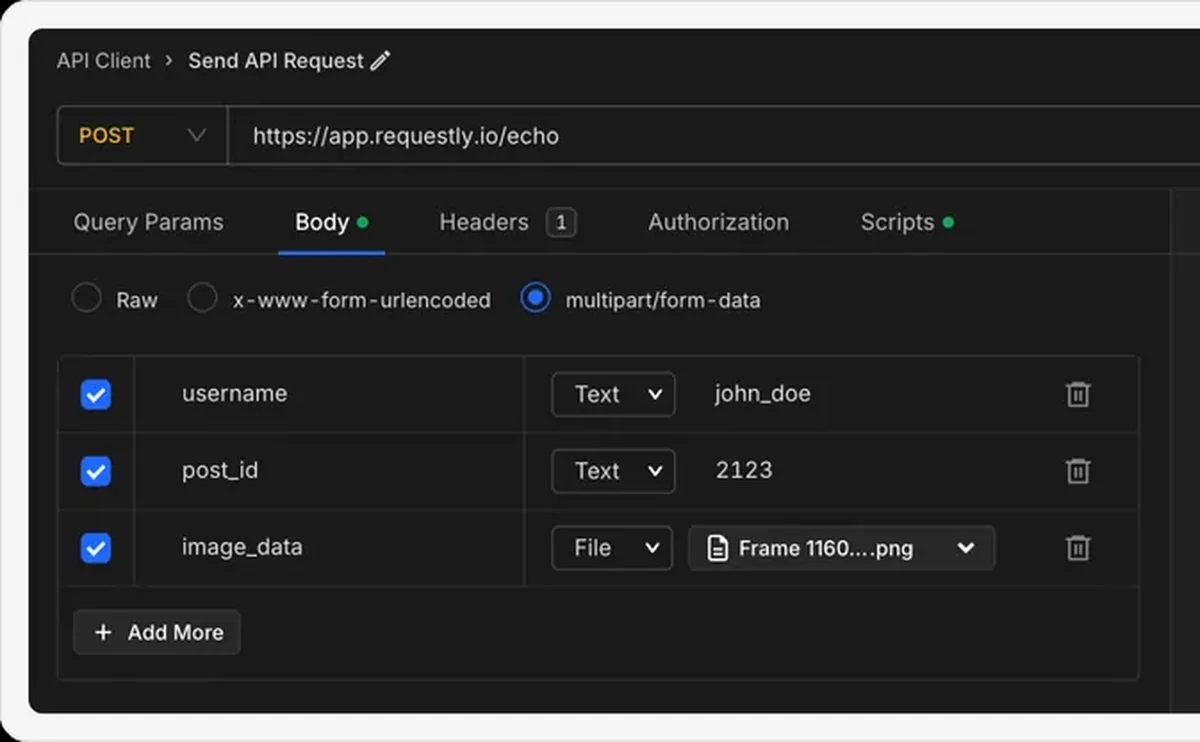







The request builder underneath everything else
Collections, environments, scripts and the runner all sit on top of one thing: composing an HTTP request and reading what comes back. This is that.
Set the method and URL
All the standard methods are there — GET to fetch, POST to create, PUT to replace, PATCH to modify, DELETE to remove, plus OPTIONS and HEAD. Type the URL and go.
Add params and path variables
Write a RESTful URL with :variableName segments:
https://api.example.com/users/:userId/posts/:postIdRequestly detects :userId and :postId and lists them under Path Variables in the Params tab. Fill in 123 and 456, and the compiled request goes to https://api.example.com/users/123/posts/456.
Add a body and headers
The Body tab handles JSON, XML, form-encoded and multipart, with highlighting so a malformed payload is visible before you send it. Headers are key/value pairs with an optional description — a small field that does a lot of work when someone else opens your collection six months later.
Read the response
Status, timing and size up top; the body pretty-printed and collapsible underneath. From there the natural next steps are saving the request into a collection, replacing the hardcoded values with variables, and adding assertions so it checks itself.