







Requestly
FeaturesHTTP InterceptorPricingRequestly vs PostmanBlogDocsDownload

Home / API Client / Collections

Keep your APIs organized as the project grows

Group related requests into collections and folders, set variables and authorization once at the collection level, and share the structure with your team.

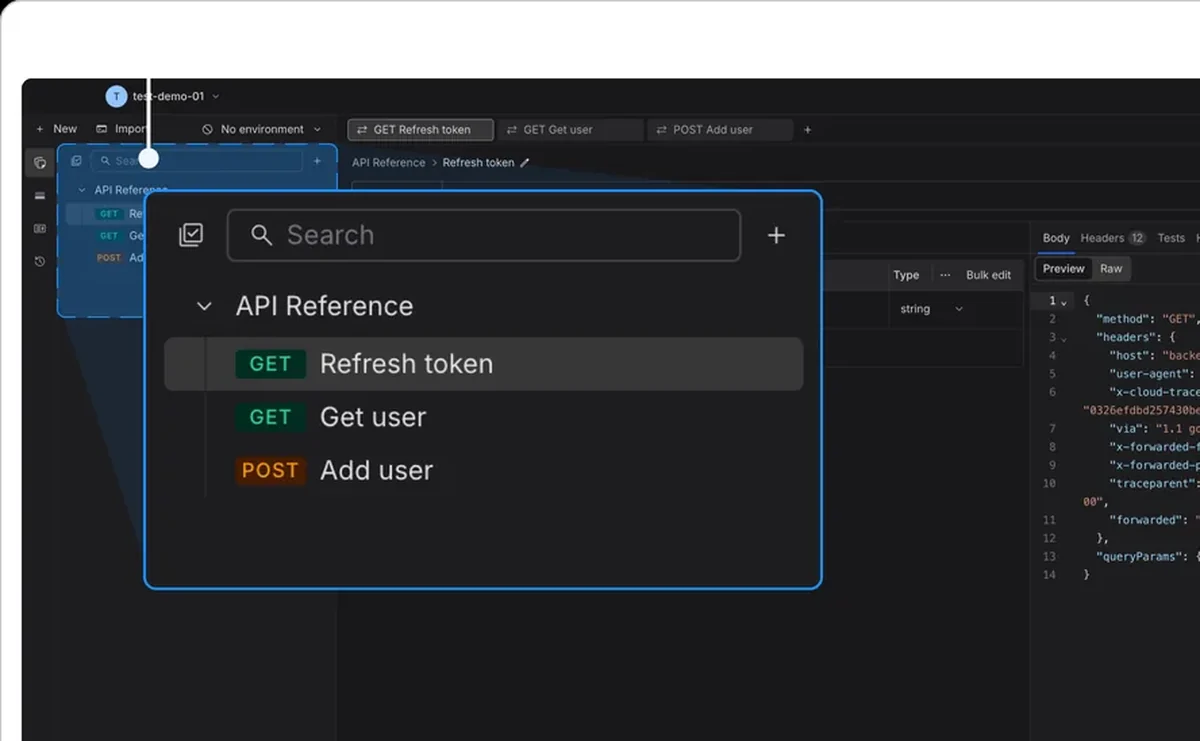
  • Folders and sub-collections. Nest requests into groups that mirror how your API is actually structured.
  • Scoped variables. Collection variables keep project-specific values next to the requests that use them.
  • Inherited auth. Set authorization once on the collection and every request inside picks it up.
API collections and folders in the Requestly API Client sidebar

Used by 300,000+ developers at 50,000+ companies

Structure that survives the project growing

Two requests need no organization. Two hundred do.

Create a collection

Create a collection, give it a name that describes what it covers, and add requests to it. Folders and sub-collections let you nest further, so the tree can mirror the shape of the API rather than being one flat list.

Set auth and variables once

A collection is a scope, not just a container. Authorization configured at the collection level applies to every request inside it โ€” so rotating a token is one edit, not forty.

Any individual request can still override what it inherits, or opt out entirely with no-auth.

Run, share and export it

Collections are what the Collection Runner executes, what import and export move around, and what you share with a team. Getting the structure right early pays off in every one of those.


Read the documentation โ†’

What a collection gives you

More than a folder โ€” a collection is a scope.

Folders and sub-collections

Nest requests into groups that match how your API is actually organized.

Collection variables

Define values scoped to one collection, so a project's settings travel with it.

Collection-level auth

Set authorization once and every request inherits it, unless it defines its own or selects no-auth.

Run the whole thing

A collection is the unit the Collection Runner executes, in order, in one click.

Import and export

Move a collection between machines or teammates as a plain .json file.

Share with your team

Put a collection in a team project and everyone works from the same definition.

Why developers switched

โ˜…โ˜…โ˜…โ˜…โ˜… verified user

Requestly is the first API client that has genuinely replaced Postman for me. Everything runs locally, so my API data never goes through a cloud server. No bloat, no pressure to upgrade.

Hasan Toor
Hasan Toor
AI & Tech Educator
โ˜…โ˜…โ˜…โ˜…โ˜… verified user

Postman stopped fitting the way our team works. We wanted our API collections in Git, not locked inside another tool. Requestly stores everything as plain JSON files, giving us full control over versioning and reviews.

NIJ Ruvos
NIJ Ruvos
Engineering Lead
โ˜…โ˜…โ˜…โ˜…โ˜… verified user

We migrated from Postman to Requestly's API Client and it has been a great experience. Storing collections locally, keeping them in Git, and working with simple JSON files made the transition seamless.

Harry S
Harry S
Principal Engineer at Tapistro

Related features

More of what the Requestly API Client does.

Authorization

API keys, Bearer, Basic and OAuth

Dynamic Variables

100+ built-in generators for realistic test data

Environments & Variables

Swap dev, staging and prod values

Examples

Save request and response pairs

GraphQL Client

Queries and mutations with introspection

Send a Request

Build and send HTTP requests, no code or terminal

See all features โ†’

Frequently Asked Questions

Click + New, choose Collection, give it a descriptive name such as "User Management APIs", and press Enter. You can then add requests and sub-collections to it.

Yes. Collections support folders and sub-collections, so you can mirror the structure of the API you are working against.

Yes. Authorization set at the collection level applies to every request inside it, unless that request defines its own authorization or explicitly selects NO-AUTH. See Authorization.

Yes. Collection and sub-collection variables are scoped to that collection, which keeps project-specific values out of your global scope. See Environments & Variables.

Give your API requests a structure

Create a collection, drop your requests in, and set auth once for all of them. Available on macOS, Windows and Linux.

macOS, Windows & Linux