







Requestly
FeaturesHTTP InterceptorPricingRequestly vs PostmanBlogDocsDownload

Home / API Client / SOAP & gRPC

Not every API is REST

Send SOAP envelopes over HTTP with WSDL import, and invoke gRPC methods discovered by server reflection β€” including all three streaming types.

  • All four method types. Unary, server streaming, client streaming and bidirectional.
  • Generate example message. Requestly reads the input definition and writes a correctly shaped JSON skeleton.
  • Metadata and trailers. The response panel shows received messages, response metadata and trailers.

gRPC is available in the Requestly desktop app. Update to the latest version if gRPC request is not in your + New menu.

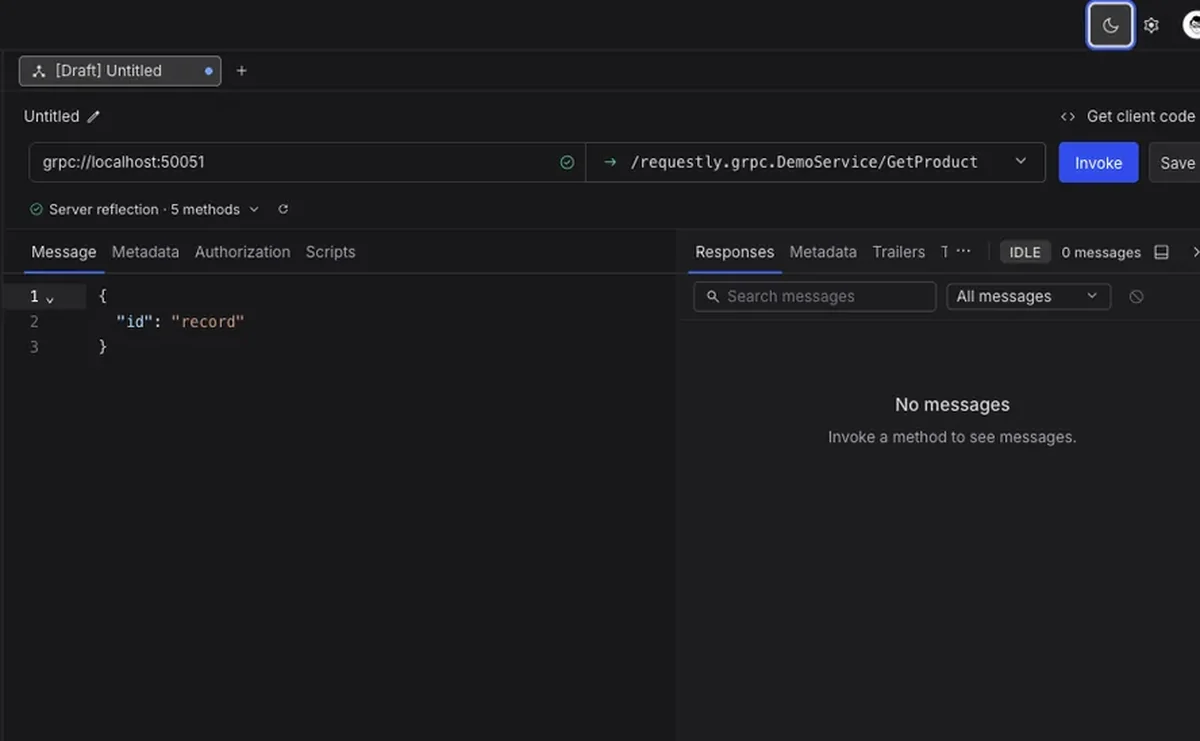
Invoking a gRPC method discovered through server reflection in Requestly

Used by 300,000+ developers at 50,000+ companies

SOAP

SOAP exchanges structured information using XML. Unlike REST it requires a strict envelope structure, and services usually publish a WSDL contract describing what they accept.

Because SOAP runs over HTTP, you send it from a standard HTTP request: set the method to POST, enter the service endpoint, then set the body to raw XML and paste your envelope. Variables work inside the envelope, so {{intA}} and {{intB}} can come from your environment rather than being edited by hand.

If the service publishes a WSDL, importing from it is faster than writing envelopes β€” and SoapUI projects import too.

gRPC

gRPC is a high-performance RPC framework built on Protocol Buffers. Rather than hitting REST-style URLs you connect to a server, choose a service method, and invoke it with a structured message.

Enter the server address

Enter the server address as host:port β€” for example localhost:50051. If the server has reflection enabled, Requestly performs server reflection and discovers the services and methods it exposes.

Pick a method type

The method dropdown marks each method with its type: unary (one request, one response), server streaming, client streaming, and bidirectional. All four are supported.

Generate an example message

Writing a request message by hand means knowing every field, its type and its nesting. Generate example message reads the method’s input definition and writes a complete, correctly shaped JSON skeleton into the editor, leaving you to replace the placeholder values.


Read the documentation β†’

SOAP

SOAP exchanges structured information as XML, with a strict envelope and usually a WSDL contract.

XML request bodies

Set the body to raw XML and paste your SOAP envelope.

Import from WSDL

Import a SOAP service directly from a WSDL file or URL instead of hand-writing envelopes.

Import from SoapUI

Bring SOAP requests across from a SoapUI project .xml file.

Variables in envelopes

Use {{variables}} inside the XML body so one envelope covers many cases.

gRPC

Connect to a server, pick a method, and invoke it with a structured message.

Server reflection

Enter a host:port address and Requestly discovers the services and methods automatically.

Or a .proto file

Load service definitions from a proto file when reflection is not enabled.

All four method types

Unary, server streaming, client streaming and bidirectional are all supported.

Generate example message

Requestly reads the method's input definition and writes a correctly shaped JSON skeleton.

Metadata and trailers

The response panel shows received messages, response metadata and trailers.

Typed by the schema

Messages are validated against the service definition rather than sent blind.

Why developers switched

β˜…β˜…β˜…β˜…β˜… verified user

Requestly is the first API client that has genuinely replaced Postman for me. Everything runs locally, so my API data never goes through a cloud server. No bloat, no pressure to upgrade.

Hasan Toor
Hasan Toor
AI & Tech Educator
β˜…β˜…β˜…β˜…β˜… verified user

Postman stopped fitting the way our team works. We wanted our API collections in Git, not locked inside another tool. Requestly stores everything as plain JSON files, giving us full control over versioning and reviews.

NIJ Ruvos
NIJ Ruvos
Engineering Lead
β˜…β˜…β˜…β˜…β˜… verified user

We migrated from Postman to Requestly's API Client and it has been a great experience. Storing collections locally, keeping them in Git, and working with simple JSON files made the transition seamless.

Harry S
Harry S
Principal Engineer at Tapistro

Related features

More of what the Requestly API Client does.

Collections

Group requests into folders

Authorization

API keys, Bearer, Basic and OAuth

Dynamic Variables

100+ built-in generators for realistic test data

Environments & Variables

Swap dev, staging and prod values

Examples

Save request and response pairs

GraphQL Client

Queries and mutations with introspection

See all features β†’

Frequently Asked Questions

Create a standard HTTP request, set the method to POST, enter the SOAP service endpoint, then set the Body to raw XML and paste your envelope. See the SOAP guide.

Yes. Import from a WSDL file or URL, or from a SoapUI project .xml file, and the requests are created for you.

Enter your server address as host:port, for example localhost:50051. If the server has reflection enabled, Requestly discovers the available services and methods with no extra setup. Otherwise you can supply a .proto file.

Yes. Unary, server streaming, client streaming and bidirectional methods are all supported, and each method shows an icon indicating its type.

gRPC is a desktop-app feature. Update to the latest desktop version; if it is still not visible, contact support.

Work with the APIs you actually have

SOAP services and gRPC servers, in the same client as your REST and GraphQL collections.

macOS, Windows & Linux