
Home / Blog / HTTP Interceptor
HTTP InterceptorResource Override Chrome Extension Alternative


Resource Override is a Chrome extension created by Kyle Paulsen to modify request/response headers, redirect URLs, insert scripts, and more. However, the developer has discontinued its development indefinitely, primarily due to new restrictions introduced in MV3. While I agree with Kyle that the new restrictions are stringent, I don’t completely disagree with Google’s decision to impose them. Considering scammers were exploiting MV2, MV3 helps prevent attackers from misusing minimal permissions for malicious activities.

As it has not upgraded to MV3, google now shows a notice - “This extension may soon no longer be supported because it doesn’t follow best practices for Chrome extensions”. This means soon the plugin with be removed from Chrome Store and you won’t be able to use it. Finding an alternative today is the only option.

Resource Override Alternative
Resource Override has 4 main features — URL -> URL, URL -> File, Inject File & Change Headers. So our search should be around a browser extension supporting all these features. Let me introduce you to a browser extension that provides these 4 features along with some other important features required during development and testing.
Requestly is an open-source and lightweight web debugging proxy available as a browser extension and desktop app to intercept and modify network requests.
Why use it instead of Resource Override?
Apart from being open-source, Requestly does all and more than what Resource Override does with a cleaner UI!
Requestly can:
- Redirect URLs
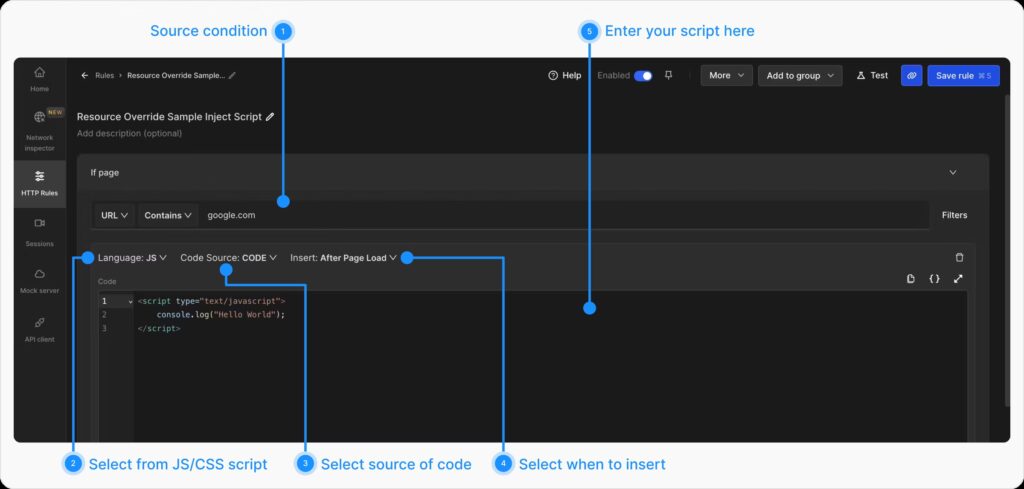
- Insert Scripts
- Modify API Response
- Modify Request Body
- Modify Headers
- Mock APIs
- Delay Network Requests
- Modify Query Parameters
- Powerful API Client
Additionally, you can create mock APIs endpoints, recording web sessions with network and console logs, and also have a lightweight web-based API testing tool to test your APIs.
For detailed comparison please check Resource Override vs Requestly
Currently, we have 200K+ users using our extension with 1200+ reviews!
Moreover,
- Requestly works with Selenium,
- Supports delay in both XHR & fetch based API requests,
- Export/ Import rules and maintain a back-up of your rules,
See what our users have to say about us!



Migrate Rules: RO → Requestly
Migrate your rules from Resource Override to Requestly with 1 Click, follow the documentation to export your rules from RO, and import them into Requestly.
Happy debugging!
Frequently Asked Questions
Why is the Resource Override extension no longer supported?
Its development stopped because it didn’t upgrade to MV3 and now violates Chrome’s latest extension requirements.
Will Resource Override stop working soon?
Yes. Chrome shows a warning that the extension may be removed from the store because it doesn’t follow MV3 best practices.
What features did Resource Override originally provide?
It offered URL redirects, URL to file mapping, file injection, and header modification.
What is the best modern alternative to Resource Override?
Requestly is the closest and most advanced alternative with matching features and additional debugging tools.
Does Requestly support everything Resource Override did?
Yes. Requestly covers redirect rules, script injection, header modification, and file injection equivalents.
What features does Requestly offer beyond Resource Override?
It adds API mocking, response editing, request body modification, query param rules, delays, a browser-based API client, and session recording.
Is Requestly open-source?
Yes. Requestly is open-source and transparent in how it handles rules and debugging.
Is there a 1-click migration from Resource Override to Requestly?
Yes. You can export rules from Resource Override and import them directly into Requestly.
Its development stopped because it didn’t upgrade to MV3 and now violates Chrome’s latest extension requirements.
Yes. Chrome shows a warning that the extension may be removed from the store because it doesn’t follow MV3 best practices.
It offered URL redirects, URL to file mapping, file injection, and header modification.
Requestly is the closest and most advanced alternative with matching features and additional debugging tools.
Yes. Requestly covers redirect rules, script injection, header modification, and file injection equivalents.
It adds API mocking, response editing, request body modification, query param rules, delays, a browser-based API client, and session recording.
Yes. Requestly is open-source and transparent in how it handles rules and debugging.
Yes. You can export rules from Resource Override and import them directly into Requestly.
Test any API request visually: import a cURL command or build from scratch in Requestly, the API client for developers.
Download →